






GETTING STARTED WITH BOOK CLUBS
Are you ready to dive into the world of student book clubs but feel overwhelmed by questions? You’ve come to the right place! Whether you’re curious about how to choose books, group students, facilitate discussions, or tips on making your groups run smoothly, I’m here to help. Let’s make reading an exciting adventure for every student!
Here are some of the most frequently asked questions I get about facilitating book clubs in the classroom. All of my answers are based on over 10 years of classroom experience using book clubs with 2nd, 3rd, and 4th grade students.
general book club questions
How did you get started with book clubs?
When I started teaching, my district was using a reading textbook for my grade level. Many teachers in my building were experimenting with novel study groups. Through much trial and error, I found that I was best able to meet the needs of my students (and their varying reading levels) through small group instruction. I was fortunate to have access to a book room with a variety of book sets for most of my book groups.
Can book clubs work with kids in early elementary?
Absolutely! I have used them with 2nd, 3rd, and 4th grade students.
My school wants me to use the district-provided curriculum. Is there a way I can still use book clubs?
If you are tied to the curriculum, I would recommend following it to the best of your ability. However, I would talk with the principal about some ideas you have for incorporating book clubs. I believe the key ways to do this are to point out how you will still meet the unit objectives, how the selected novel ties into the overall theme or message, and how a book club will allow you to support the needs of students significantly above, or below grade level.
Do you incorporate technology with your book clubs, or is it strictly paper & pencil?
This is up to you and your teaching style. I prefer more traditional paper and pencil activities for students because I believe strongly that reading and writing go hand-in-hand. When students write about their reading, it helps them make sense of the text, synthesize information, and express ideas clearly, all of which reinforce their overall learning and understanding.
How do you keep students motivated and excited about reading?
I think is unrealistic to expect students to be excited about every book they are asked to read. However, I also believe that students pick up on the excitement from the people around them. When teachers are excited about books and reading, it can have a positive impact on a student’s perspective. Keep selecting books that are high-interest, paced well, and relatable.
What do I need to get started with a book club?
To get started you need time, books, and a group of students. Beyond that, I suggest you have a goal for the group, and a flexible plan for how to meet that goal.
Is it possible to make book clubs align with the Science of Reading?
I think book clubs are a great way to work on the comprehension, vocabulary, and fluency components in authentic ways. As students come across unfamiliar words in their novels, they can apply their phonics and phonemic awareness skills to decode and determine meaning of these new terms.
What adjustments do you make for students with different learning needs?
I think the adjustments will look different for every student, especially those on an IEP or 504 plan. This might include using audiobooks, adding multi-sensory activities, scaffolded discussion questions, frequent breaks, differentiated assignments or tasks, and additional support through volunteers or paraeducators.
preparing for book clubs
How many students do you have in each group?
I think the ideal group size is 4-6 students. However, I have had groups of 2 all the way up to a group of 8. I don’t recommend the larger groups simply because it makes it more difficult to find enough books and keep the group on track.
How do you group your students?
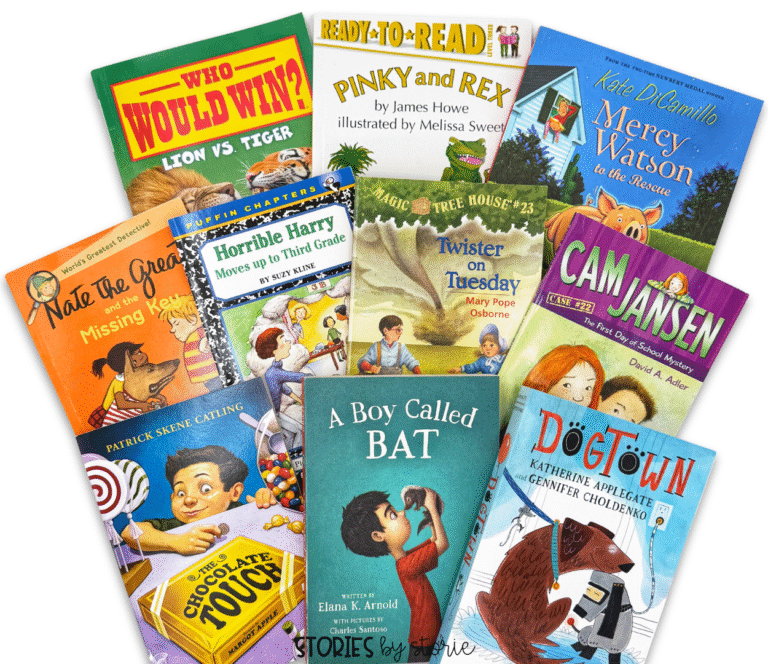
I generally group my students by reading level or by instructional strategy. However, I have also done interest-based groups where students are presented with a variety of books and they rank their choices before I form the groups.
How do you decide which book to read?
Choosing the right book for your reading group can be overwhelming – especially when it can be a determining factor in the engagement and success of your group.
Here are 10 things I take into consideration when choosing books for reading groups.
How do you manage students who want to read a specific book, but it's too difficult for them?
If a book is too difficult for a student, I try to determine if I can provide the support they need to be successful. If not, it’s time to guide them towards a different book.
Some of the ways you can support students is with an audiobook or someone who can read to (or with) them. This might be a volunteer or an older student from a buddy classroom. If you have parent support, they can read the chapter(s) together at home the night before the discussion. Just make sure you trust that the book will travel safely to and from school.
How do I get enough books for my students, especially if there is no funding?
This is hard! As I mentioned before, I was fortunate to work in a school with an established book room. Then I would often use Scholastic book clubs. These orders helped me save up enough points to buy a few new sets of books each year.
When you’re just getting started, there are a few things you can try:
- check with your local library or thrift stores
- borrow from teachers at your school
- email your student families to see if they have a copy at home to lend
- ask your own friends and family to donate
- check for audiobook or eBook options that work with your existing technology
- write a grant or use a crowdfunding platform (make sure you have permission)
How often do you meet with your book club?
This depends on the level of the group. For my higher readers, we might go longer between group time. For my lower readers, we meet more frequently so I can provide more support with the target strategy.
Can you share what your schedule looks like?
For this example, let’s take a look at my second grade class in the middle of the year. The groups with a star next to them were reading novels, while the other groups were reading decodable books and/or passages with additional phonics or phonemic awareness instruction.
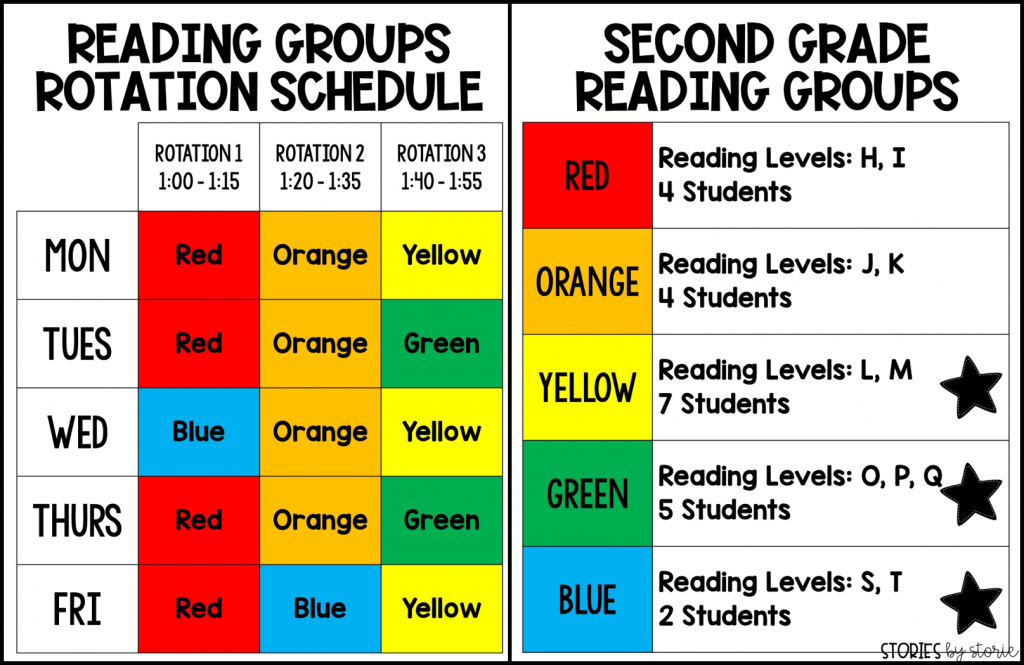
I relied heavily on a modified Daily 5 routine during my reading block. When students weren’t meeting with me, they often had a reading assignment to complete for group before moving to their Daily 5 choice. I also utilized parent and community volunteers to work with students on fluency or other skills.
DURING READING
Do you read the book together, or do students read it on their own?
I use a good mix of both. While I strongly encourage you to select books that your students can read independently, there are times when reading together is necessary:
- if a chapter is heavy on new and unfamiliar vocabulary
- a highly emotional event or sensitive topic is coming up (ex. the end of Charlotte’s Web)
- the group is struggling to comprehend key events
- students are struggling with the pacing or time-management
- after several students have been absent or we’ve had a substitute
- after a long weekend
Which strategies do you teach during book club?
All of them!
But seriously, book clubs are a great way to tackle reading skills with a small group. For 2nd and 3rd graders, we often work on predicting, making connections, summarizing (or retelling), character development, vocabulary, inferencing, and more!
Knowing your students reading strengths and struggles is a great way to determine which strategies to focus on.
How do you monitor comprehension and engagement with the novels?
An easy way to monitor comprehension is by asking questions. Often I do this through group discussion or with a comprehension packet. When students struggle to answer questions or constantly look back to find the answers, it might be time to have them re-read a chapter either independently or as a group.
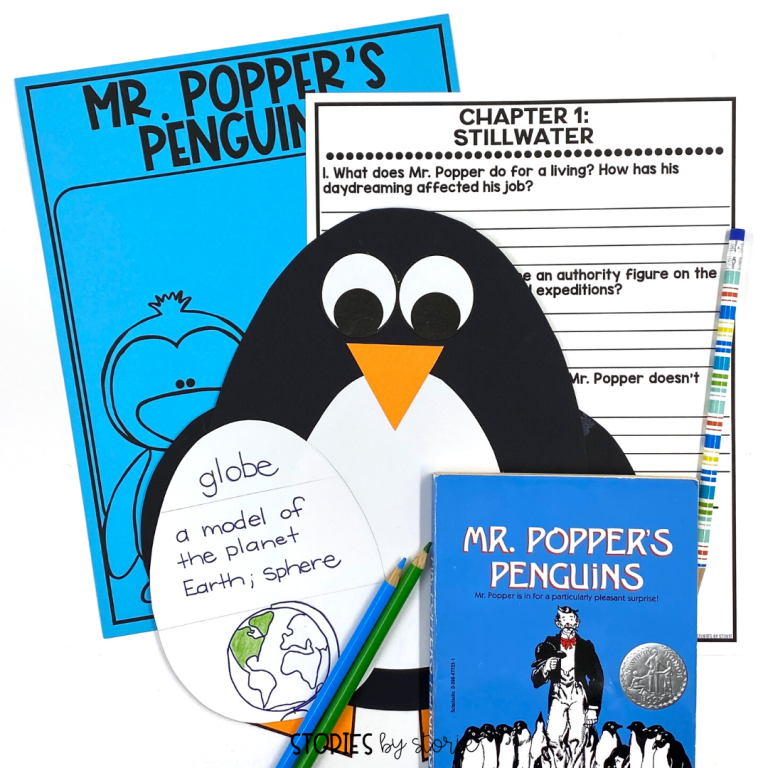
I have created a variety of book companions for my 2nd and 3rd grade students. You can find them in my TPT store.
Is there a way to assess fluency or vocabulary during book clubs?
Absolutely!
For fluency, you can select a small section of text and do a cold (or warm) read. You can time it and do a running record for error analysis. Another idea is to have students record themselves reading and do a self-assessment on their phrasing and expression.
For vocabulary, you can pre-select a few words and phrases from each chapter. As students read, they can use context clues to determine the meaning. Other ideas include keeping vocabulary journals, creating word maps, playing matching games, and utilizing vocabulary quizzes.
How do you decide what to talk about when you meet with the group?
Knowing my instructional goals ahead of time helps me come up with a set of discussion questions. If we are working on comprehension, I will ask a variety of text-dependent questions. If character development is the focus, we work hard on adjectives and text evidence to support them.
There are many sources for generic questions out there that you can always start with until you get more comfortable.
How do you encourage quiet students and/or reluctant readers to participate in discussions?
Many students are uncomfortable speaking up or sharing their ideas in large groups. By keeping your groups small, this takes some of the pressure off an intimidating situation.
One thing you might try is having students respond to discussion questions in writing ahead of time. They can read their thoughts aloud instead of trying to collect and share their thoughts on the spot.
How do you move from teacher-led discussions to student-led discussions?
This can be done over time by setting clear expectations, modeling, and a lot of guided practice (I mean A LOT!!). In my experience this was much more difficult to do with younger students, especially when I had particular instructional goals in mind.
How do you handle sensitive topics that might come up in novels?
I highly recommend that you always read any book you will use with your book club ahead of time. If there is any questionable content or language, make sure you discuss with your principal whether additional steps to get permission are required.
Think carefully about your students when selecting books.
AFTER READING
We just finished our novel, now what?
Congratulations on finishing a novel with your group! Now would be a great time to reflect on what went well, and what changes you might want to make before starting your next book club. This might include making changes to the group dynamics, choosing a shorter (or longer) novel, and determining the types of activities you would like students to complete.
Do you do any culminating projects or celebrations when students finish a book?
Sometimes we celebrate with a book-related craft or snack. I might give students a project menu where they choose what they want to do after reading. This includes making a game board, poster display, an interview with their main character, a shoebox diorama, a diary for their main character, and more!
If you have classroom volunteers, this is a fantastic way to get them involved.
How do you grade students who participate in book clubs?
If you utilize paper and pencil activities for comprehension, this can be an easy way to gauge how well students are understanding what they have read. Culminating projects are also an option when used with a well-designed rubric.
If you are only using discussions with your group, you can keep track of how often students are participating, how thorough and thoughtful their responses are, and how often they come prepared for group discussions.
How do I know if my book clubs are successful?
Great question! I think there are many things you can look at to determine how effective your book clubs are:
- Are your students engaged with the books?
- Are they making progress academically?
- Are your students motivated to keep reading and discussing the book?
If you have a question you’d like to see answered, send it my way!